Crescent Petroleum, 2026
OGCI Limited
EY & Associés
We have been engaged by OGCI Limited to perform a “limited assurance engagement”, as defined by International Standards on Assurance Engagements, hereafter referred to as the engagement, to report on a selection of OGDC indicators (the “OGDC Indicators”) detailed in Appendices 1 and 2 contained in OGDC’s 2026 status report for the year ended December 31, 2025.
Basis for qualified conclusion
For quantitative indicators, we had access to the nature and extent of third-party verifications conducted at the signatory level for 19 out of 52 OGDC signatories (currently 56 OGDC signatories but only 52 of them reported data for 2025), representing 65% of the “Operated greenhouse gas emissions – all sectors (Scope 1)” indicator (see Appendix 1 for other OGDC Indicators). Furthermore, the remaining companies either did not have their data verified by an independent third-party, or their independent third-party was unable to provide a sufficient level of information.
For qualitative indicators, we had access to the supporting evidence described in the “Nature and scope of the work” section of this report for only a limited number of 56 OGDC signatories, which varies depending on the indicator (see Appendix 2 for qualitative OGDC Indicators). Furthermore, the remaining companies either provided information without the supporting evidence required by our procedures, in which case they were categorized solely on the basis of the information reported, or did not provide any information.
Qualified conclusion
Based on our work, described in the “Nature and scope of the work” section of this report, except for the possible effects of the matters described in the Basis for Qualified Conclusion section, nothing has come to our attention that causes us to believe that the OGDC Indicators are not presented, in all material respects, in accordance with the Charter and the OGDC Reporting Framework dated November 2026.
Emphasis of matter
We draw attention to the “Definitions” section of the OGDC Reporting Framework dated November 2026 and to the OGDC status report which describe that:
For the reporting of GHG emissions, companies can use the same methodology approach used for their public reporting of GHG emissions in other relevant documentation (e.g. Annual Report, Sustainability Report, etc.).
Company and/or regulatory recording and reporting requirements for methane vary between and within OGDC companies and operating jurisdictions.
Our conclusion is not qualified in respect of this matter.
Understanding how OGDC has prepared the OGDC Indicators
The absence of a commonly used, generally accepted reporting framework or established practices on which to draw, evaluate and measure sustainability information allows for different, but acceptable, measurement techniques that can affect comparability between entities and over time.
Consequently, the OGDC qualitative Indicators need to be read and understood together with the Charter and with the OGDC Reporting Framework dated November 2026, which OGCI Limited has used to prepare the OGDC Indicators.
Responsibility of OGCI Limited
As part of this voluntary approach, it is the responsibility of OGCI Limited, acting as the OGDC Secretariat, to:
- disclose the Charter, available on OGDC’s website;
- disclose the OGDC Reporting Framework dated November 2026, available on OGDC’s website;
- consolidate signatories’ data reported by them and ensure their consistency;
- publish the consolidated OGDC Indicators on OGDC’s website.
Responsibility of OGDC signatories
As part of this voluntary approach, it is the responsibility of OGDC signatories to report to OGDC their data according to the Charter and the OGDC Reporting Framework dated November 2026, to provide EY & Associés with supporting evidence for the qualitative information reported, to arrange external verification in accordance with OGDC’s and EY & Associés’ criteria, and to provide EY & Associés with a summary of the nature and details of the verification performed on their data at signatory, together with associated findings.
Independence and quality management
We have maintained our independence and confirm that we have met the requirements of the Code of Ethics for Professional Accountants issued by the International Ethics Standards Board for Accountants, and have the required competencies and experience to conduct this assurance engagement.
EY & Associés also applies International Standard on Quality Management 1, Quality Management for Firms that Perform Audits or Reviews of Financial Statements, or Other Assurance or Related Services Engagements, which requires that we design, implement and operate a system of quality management including policies or procedures regarding compliance with ethical requirements, professional standards and applicable legal and regulatory requirements.
Responsibility of the independent verifier
Our responsibility is to express a conclusion on the presentation of the OGDC Indicators based on the evidence we have obtained. We conducted our engagement in accordance with International Standard on Assurance Engagements 3000 Revised, Assurance Engagements other than Audits or Reviews of Historical Financial Information (”ISAE 3000 (Revised)”) and with professional standards applicable in France. Those standards require that we plan and perform our engagement to express a conclusion on whether we are aware of any material modifications that need to be made to the OGDC Indicators in order for them to be in accordance with the Charter and the OGDC Reporting Framework dated November 2026, and to issue a report. The nature, timing and extent of the procedures selected depend on our judgment, including an assessment of the risk of material misstatement, whether due to fraud or error.
We believe that the evidence obtained is sufficient and appropriate to provide a basis for our limited assurance conclusions.
It is not our responsibility to give an opinion on the entire annual report or on the compliance of the OGDC Indicators with applicable legal provisions.
Nature and scope of the work
Procedures performed in a limited assurance engagement vary in nature and timing and are less in extent than for a reasonable assurance engagement. Consequently, the level of assurance obtained in a limited assurance engagement is substantially lower than the assurance that would have been obtained had a reasonable assurance engagement been performed. Our procedures were designed to obtain a limited level of assurance on which to base our conclusion and do not provide all the evidence that would be required to provide a reasonable level of assurance.
We conducted the work described below:
- We assessed the suitability of the OGDC Reporting Framework dated November 2026 in terms of its relevance, comprehensiveness, reliability, neutrality and understandability by taking into consideration the best practices of the oil and gas industry.
- We conducted the following works related to the consistency and the arithmetical accuracy of signatories’ quantitative data reported by 52 OGDC signatories (of the 56 signatories, four companies did not submit any data for the 2025 reporting period) with the OGDC Reporting Framework dated November 2026:
- assessment of the appropriate application of the OGDC Reporting Framework dated November 2026 to the signatory quantitative data;
- analysis and investigation of signatory data value change in 2025 compared to 2024;
- calculation of consistency ratios and investigation to identify potential outliers among signatory data.
- We conducted a reconciliation between signatory data and publicly available information.
- For qualitative indicators, we assessed the nature and extent of third-party verification conducted at Company level on signatory data against the following topics (hereafter the “Criteria”) through the collection of supporting evidence and interviews with the external third parties auditors of signatory, based on the following:
- level of assurance;
- work program;
- assurance standard;
- verification findings;
- Scope 1 operated emissions coverage reached with site-level verifications;
- physical site visits and/or remote site visits;
- total man days allocated to the verification;
- third-party team members’ competencies.
- For the qualitative OGDC Indicators, we assessed the existence of the information reported by signatories on the basis of the following supporting evidence:
- “Number of companies reporting Scopes 1 and 2”: where the Company’s Scopes 1 and 2 emissions had not been verified by an independent third party but nevertheless included in our review on quantitative indicators, we reviewed Scopes 1 and 2 data published in public reports, on the Company’s website or through the OGDC survey, together with documentation describing the Company’s reporting guidelines and reporting process;
- “Existence of interim Scopes 1 and 2 ambition”: the Company’s public communications or, where not publicly available, other supporting documentation assessed on a case-by-case basis, evidencing a quantified and time-bound ambition (2030 or earlier), with a clearly defined baseline, an absolute or intensity reducion target, and a boundary covering Scope 1 and Scope 2 GHG emissions;
- “Existence of action plans” to achieve the near-zero methane emissions, zero routine flaring and interim Scopes 1 and 2 emissions ambitions: the company’s public communications or, where not publicly available, other supporting documentation assessed on a case-by-case basis, evidencing identified reduction levers, actions implemented or initiated, and identified resources.
- We conducted interviews with 32 OGDC signatories. For the remaining signatories, clarification questions were addressed and resolved through e-mail correspondence.
- We analyzed the consolidation performed by OGDC on the anonymized signatories survey data.
We consider that the work we have performed by exercising our professional judgment allows us to express a limited assurance conclusion; an assurance of a higher level would have required more extensive verification work.
Paris-La Défense, October 30, 2026
EY & Associés
Partner, Sustainable Development
Christophe Schmeitzky
OLACDE, 2026
APPENDIX 1 - PERCENTAGE OF OGDC QUANTITATIVE INDICATORS FOR WHICH THE THIRD-PARTY VERIFICATION WORK HAS BEEN SHARED WITH EY
| OGDC quantitative indicators | Number of signatories reporting the indicator in the survey | 2025 OGDC Indicators value in the Status report1 (survey data) | Percentage of the total 2025 OGDC indicators for which the third-party verification work has been shared with EY |
|---|---|---|---|
| Operated greenhouse gas emissions – all sectors (Scope 1) | 46 | 728 Mt CO2e | 65% |
| Operated greenhouse gas emissions – upstream (Scope 1) | 47 | 375 Mt CO2e | 68% |
| Operated greenhouse gas emissions – upstream (Scope 22) | 47 | 40 Mt CO2e | 37% |
| Operated methane emissions – upstream | 47 | 1.3 Mt CH4 | 50% |
| Natural gas flared – upstream | 41 | 15 570 MSm3 | 60% |
1. Consolidation of the survey data, where provided by the signatories, excluding any estimations and third-party data included in the Status Report for signatories that did not report.
2. Aggregated using market-based Scope 2 emissions where available; location-based figures were used for companies that could not provide market-based data.
APPENDIX 2 - NUMBER OF OGDC SIGNATORIES FOR WHICH SUPPORTING EVIDENCE ON QUALITATIVE OGDC INDICATORS HAS BEEN SHARED WITH EY 3
| Indicator | Yes |
|---|---|
| Scope 1 & 2 GHG Emissions Reporting | 434 |
| Third Party verification of GHG data | 38 |
3. Refer to the appendix of the OGDC Status Report for definitions of the categories used in the graphs.
4. Including public and non-public reporting.
| Indicator | Fully consistent | Partially consistent |
|---|---|---|
| Interim Scope 1 & 2 ambitions | 34 | 6 |
| Interim Scope 1 & 2 action plan | 34 | 6 |
| Near zero methane action plan | 31 | 7 |
| Zero routine flaring action plan | 34 | 5 |
OGDC 2026 Status Report
References
TotalEnergies, 2026
METHODOLOGY APPENDIX
Qualitative data
Qualitative data is presented as reported by companies, reflecting their responses to the survey questions, any supplementary information provided throughout the review process, or as reported in their own publications.
For each topic, several categories exist (e.g. fully, partially consistent, etc.) reflecting the level of consistency against the Charter’s language, which are all defined below and in the reporting framework. The Secretariat has categorized each response using those definitions but has not independently verified the accuracy of what companies provided.
Past results across qualitative KPIs are the same as in previous reports, with some limited restatements due to:
- Changes in membership: three new signatories have joined the initiative since the baseline report, and one has left. These membership changes have been incorporated into the baseline and other years, to have a consistent representation of 56 signatories across all years.
- Non-applicable cases: Four companies without operations have been consistently recognized as “non-applicable” for action plan KPIs in all reporting years, which was not previously the case. Additionally, two companies with only mid and downstream operations were categorized as “non-applicable” on methane and flaring action plans in all reporting years.
- Timeline challenges: For five companies, annual reporting cycles were still underway at the time of publication of the previous report. Where relevant, prior year outcomes have therefore been restated to reflect subsequent publications.
It is important to note that neither improvements in the quality or quantity of data disclosed, nor the existence or disclosure of action plans constitute evidence that emissions have fallen. Nor does a “Fully consistent with the Charter” categorization mean that the actions identified are sufficient to meet the Charter’s goals.
Coverage estimates
Throughout the report, coverage estimates are used to indicate the extent to which aggregate qualitative results reflect the full OGDC membership of 56 companies. Coverage is reported as a percentage of total OGDC production and total OGDC emissions (Scope 1 and 2, methane, or flaring, as relevant). The terms “total OGDC production” and “total OGDC emissions” therefore refer to estimates aggregated from individual signatory figures, rather than production or emissions attributable to OGDC as a collective entity.
Coverage percentages are calculated against the best available estimate of total OGDC values, which incorporates reported company data alongside estimations and Rystad data where required to approximate a complete dataset (full explanation under the quantitative data section below). Because those totals include estimated and external data, the coverage percentages are themselves estimates.
OGDC GOVERNANCE
OGDC CEO Champions
The CEO Champions are three CEOs appointed from among the companies by the signatories. The CEO Champions represent the current proportion of national oil companies (NOCs) and international oil companies (IOCs) within the Charter, which today is two-thirds NOC and one-third IOC. Each Champion works with signatories and external stakeholders to advance the aims of the Charter.
The OGDC Secretariat
The OGDC Secretariat is a dedicated operational team from the OGCI Secretariat that supports signatories in working toward the aims of the Charter. It works in coordination with the CEO Champions, the Signatories Committee and signatories to carry out OGDC programs and projects. The Secretariat also engages with relevant external stakeholders in the energy industry and civil society to support the effective implementation and practical delivery of the Charter’s aims. The Secretariat’s responsibilities include coordination, support, facilitation, and monitoring of the Charter’s mission.
Signatories Committee
The Signatories Committee is a broader body of senior executives drawn from signatories, composed to balance representation between IOCs and NOCs. It supports the CEO Champions and the implementation of the Charter’s objectives.
Signatory companies
Signatories are engaged and consulted in the decision-making process for all significant Charter matters, including partnerships and approval of external reports. All signatory-held governance roles are voluntary and are not remunerated.
Aramco, 2026
Detailed category definitions
| Reporting Scope 1 and 2 emissions | |
|---|---|
| Category | Definition |
| Yes | The company reports its Scope 1 and 2 GHG emissions (operated or equity) in accordance with internationally recognized frameworks to OGDC and publicly. |
| Yes, but not public | The company reports its Scope 1 and 2 GHG emissions (operated or equity) to OGDC but not publicly. |
| No | The company does not report its Scope 1 and 2 GHG emissions to OGDC or publicly, or only reports one of its emission Scopes. |
| No information provided to this question | The company did not respond to this question or to the survey entirely |
| Third-party verification of Scope 1 and 2 GHG data | |
|---|---|
| Category | Definition |
| Yes | The company has obtained a third-party verification of its Scope 1 and 2 GHG emissions (operated or equity) publicly available or has a strong track record of annually verifying Scope 1 and 2 GHG emissions expected later in this reporting year. |
| No | The company has not obtained independent third-party verification of its Scope 1 and 2 GHG emissions data. |
| No information provided to this question | The company did not respond to this question or to the survey entirely. |
| Scope 1 and 2 2030 ambition | |
|---|---|
| Category | Definition |
| Fully consistent with Charter | The company has publicly disclosed Scope 1 and Scope 2 GHG emissions reduction targets (combined or separate), supported by clear interim milestones before 2030 and a defined level of ambition based on quantified reductions from a stated baseline, expressed in either absolute or intensity terms. The ambition may be on operated and/or equity basis. |
| Partially consistent with Charter | The company has established Scope 1 and Scope 2 GHG emissions reduction targets (combined or separate) but does not meet at least one key criterion: either the targets are not publicly disclosed, or interim milestones are defined beyond 2030 or covers a partial emission perimeter. The ambition may be operated and/or equity basis. |
| Not consistent with the Charter | The company has not established Scope 1 and Scope 2 GHG emissions reduction targets or has established targets that do not meet key design criteria, such as a quantified reduction ambition relative to a stated baseline, and coverage of the oil and gas activities. |
| No information provided to this question | The company did not respond to this question or to the survey entirely. |
| Scope 1 and 2 2030 action plans | |
|---|---|
| Category | Definition |
| Fully consistent with Charter | The company has identified actions to achieve its stated interim Scope 1 and 2 emissions ambition whether achieved, ongoing or near term. For EY, the Company has additionally demonstrated the ability to implement these actions. |
| Partially consistent with Charter | The company has identified actions to achieve its stated interim Scope 1 and 2 emissions ambition. However, the scope of emissions covered is limited. |
| Not consistent with the Charter | The company has not initiated the process to identify actions to achieve its stated interim Scope 1 and 2 emissions ambition. |
| No information provided to this question | The company did not respond to this question or to the survey entirely. |
| Not applicable | Question not applicable to Company because it does not operate any assets. |
| Methane mitigation action plans | |
|---|---|
| Category | Definition |
| Fully consistent with Charter | The company has identified actions to achieve its stated near-zero upstream methane emissions ambition whether achieved, ongoing or near term. For EY, the Company has additionally demonstrated the ability to implement these actions. |
| Partially consistent with Charter | The company has identified actions to achieve its stated near-zero upstream methane emissions ambition. However, the scope of emissions covered is limited. |
| Not consistent with the Charter | The company has not initiated the process to identify actions to achieve its stated near-zero upstream methane emissions ambition. |
| No information provided to this question | The company did not respond to this question or to the survey entirely. |
| Not applicable | Question not applicable to Company because it does not operate any upstream assets. |
| Flaring mitigation action plans | |
|---|---|
| Category | Definition |
| Fully consistent with Charter | The company has identified actions to achieve its stated zero routine flaring ambition whether achieved, ongoing or near term. For EY, the Company has additionally demonstrated the ability to implement these actions. |
| Partially consistent with Charter | The company has identified actions to achieve its stated zero routine flaring ambition. However, the scope of emissions covered is limited. |
| Not consistent with the Charter | The company has not initiated the process to identify actions to achieve its stated zero routine flaring ambition. |
| No information provided to this question | The company did not respond to this question or to the survey entirely. |
| Not applicable | Question not applicable to Company because it does not operate any upstream assets. |
Quantitative data
To provide a more complete picture of the performance of OGDC signatories over the 2023-2025 reporting period, the Secretariat undertook a structured process to address data gaps across the dataset. Survey-reported data was always prioritized and used wherever available. This includes survey data where specific adjustments were applied for calculation purposes (e.g., use of conversion factors and use of total Scope 2 instead of Scope 2 upstream for the carbon intensity calculation). However, relying exclusively on survey-reported data would have resulted in gaps in aggregate figures and would risk understating the emissions, production and operational footprint represented by the 56 signatories. To address this, a consistent hierarchy of data sources and estimation approaches was applied across all KPIs.
Despite estimating data gaps in aggregate figures, the third-party verification of quantitative aggregates covers only data reported by signatories in the 2026 data collection cycle. Estimated values, data from previous submissions or public sources, and Rystad Energy data have not been verified.
Data hierarchy
- Data reported by companies through the 2026 reporting process
- Data disclosed publicly
- Estimations
- External data from Rystad Energy
Estimations
Estimations are used throughout this report to improve completeness across the quantitative dataset. These estimation approaches were applied consistently across signatories and reporting years and were designed to prioritize company-reported data.
Estimations are used not only to improve data completeness, but also to support comparability over time. By filling gaps in company-reported data, they reduce year-to-year changes in the reporting perimeter that could otherwise distort trends in aggregate performance. As such, survey data and estimated data should be considered together when interpreting trends over time for a given KPI.
Where company-reported data was available for at least one year within the reporting period, the Secretariat sought to estimate missing years using the available company data by carrying data forward or backward to the closest available value, rather than introducing external sources. This approach was adopted to avoid artificial trends that can arise from differences in methodology between company-reported and external datasets. When estimations were used, this was clearly indicated in the report in a separate category.
External data
Where no company-reported data was available for an indicator, and none of the estimation approaches described above was possible, Rystad Energy data was used to support aggregation and trend analysis.
For some KPIs, particularly Scope 2 emissions and certain all-sector emissions indicators, equivalent external datasets were not available. Consequently, gaps remained for a limited number of companies. For the upstream carbon intensity calculation, the small number of companies represented using external Rystad emissions data therefore had no Scope 2 estimate available. To enable inclusion in aggregate upstream carbon intensity calculations, Scope 2 emissions were estimated using the average upstream Scope 2-to-Scope 1 ratio observed across reporting signatories. Resulting values remained classified as externally derived estimates.
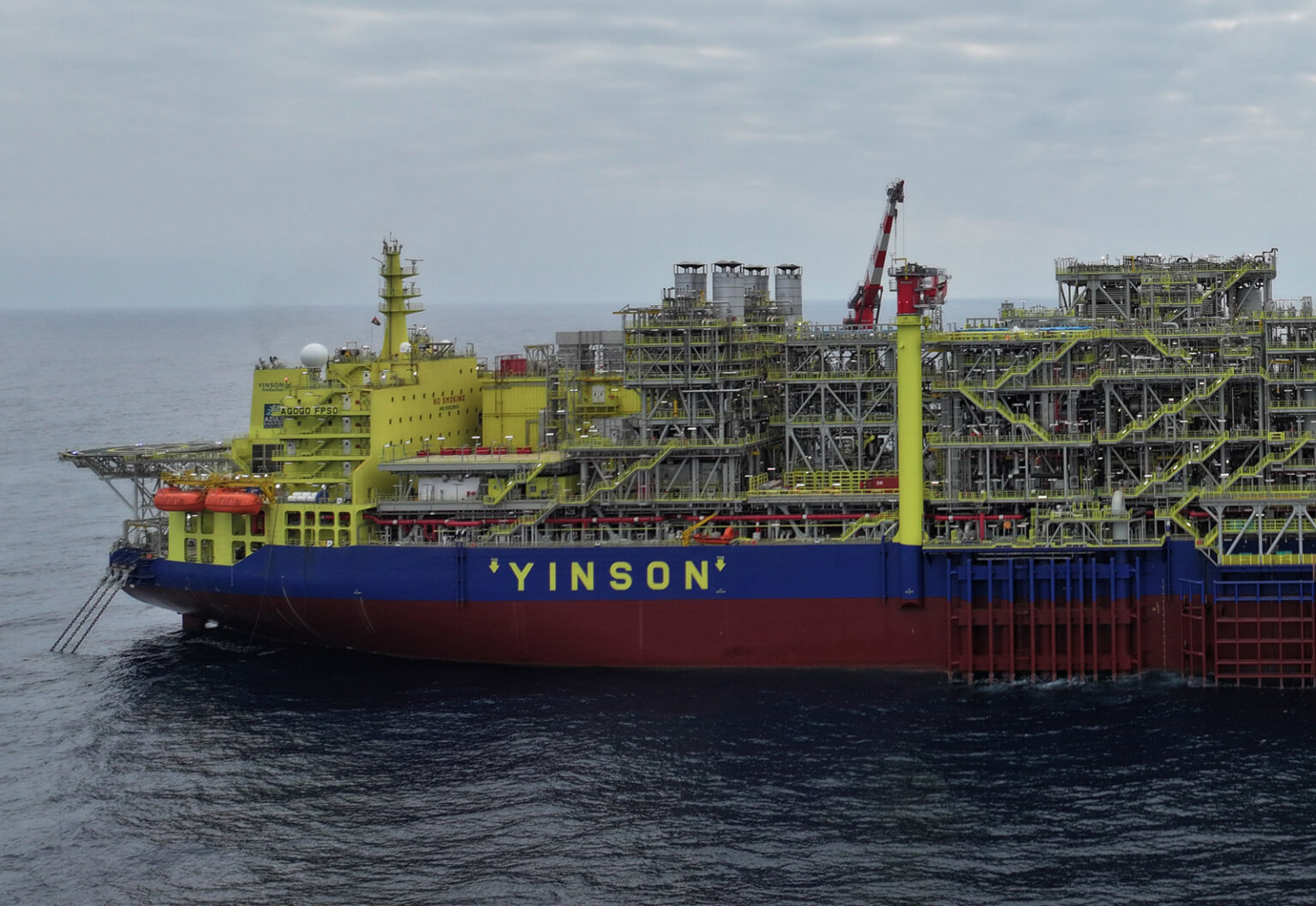
Azule, 2026
ACKNOWLEDGMENTS
We would like to express our sincere gratitude to our signatories, whose initiative, drive and collaboration have enabled the OGDC Secretariat to continue expanding the Collaborate & Share program. Participation through 1:1 training, webinars, peer-to-peer exchanges and case study submissions underpins this initiative, helping foster learning across and beyond the oil and gas industry. In addition to our signatories, we are also grateful to our external partners, who are helping activate a culture shift to deliver long-term, lasting impact on decarbonization goals and transparency in reporting.
Contributors to the Collaborate & Share program


















Founding partner of the OGDC and host of the Secretariat

ENDNOTES
- Provisional estimate of global oil and gas production of approximately 180 Mboe/day in 2025, based on IEA indicators for oil production of 106.2 Mboe/day and global natural gas production of 73.8 Mboe/day. Source: IEA Oil Market Report (January 2026), IEA Gas Market Report Q2 2026.
- EY’s verification process is voluntary and asks companies to provide documentation, take part in interviews, and, for quantitative disclosures, to provide evidence of company-level third-party verification arrangements. See EY’s verification statement for further details.
- It is important to note that neither improvements in the quality and quantity of data disclosed, nor the existence and disclosure of action plans, constitute evidence that emissions have decreased.
- Remarks provided on September 9, 2026, for the OGDC 2026 Status Report
- Compared to conventional cast-in place concrete foundations.
- World Bank, “Zero Routine Flaring by 2030 (ZRF) Initiative,” 2026.
- In last year’s report, 41 companies reported 810 Mt CO2e in emissions. The two figures cover different groups of companies and are not directly comparable.
- In the previous report, this figure could only be estimated.
- The figure presented has been rounded up to the nearest whole number.
- Spending in 2025 across the categories defined in the OGDC Reporting Framework, including renewable energy, electricity and heat storage, CCUS, energy efficiency projects, biofuels, blue or green hydrogen, sustainable mobility and natural climate solutions. This includes acquisitions and equity-related investments in companies and projects in these areas, and excludes natural gas projects and purchases of carbon credits. The figure reflects spending and does not represent emissions reductions achieved.
- OGDC Secretariat engagement records. Calculated as the total number of regional engagement activities conducted during the reporting period. Figures are based on information available to the Secretariat through event registration, attendance, and participation records. The same methodology was applied throughout the reporting period. Reviewed by the OGDC Secretariat against source records October, 2026. Not subject to independent assurance.
- OGDC Secretariat engagement records. Calculated as the aggregate number of participants in regional engagement activities during the reporting period. Figures are based on information available to the Secretariat through event registration, attendance, and participation records. The same methodology was applied throughout the reporting period. Reviewed by the OGDC Secretariat against source records October, 2026. Not subject to independent assurance.
- OGDC Secretariat engagement records. Calculated as the number of signatories participating in the OGCI Satellite Monitoring program during the reporting period and the number of assets monitored through the program. Figure is based on program participation and asset monitoring records maintained by the Secretariat. The same methodology was applied throughout the reporting period. Reviewed by the OGDC Secretariat against source records October, 2026. Not subject to independent assurance.
- OGDC Secretariat engagement records. Calculated as the aggregate number of companies engaged through Collaborate & Share activities, including webinars, 1:1 training, technical support, and other program engagements during the reporting period. Companies are counted once, regardless of the number of activities attended or the number of participants involved. Figure is based on participant registration, attendance and engagement records maintained by the Secretariat. The same methodology was applied throughout the reporting period. Reviewed by the OGDC Secretariat against source records October, 2026. Not subject to independent assurance.
- OGDC Secretariat engagement records. Calculated as the number of mentorship and peer-to-peer programs delivered during the reporting period. Programs were counted once formally launched. Figure is based on program delivery records maintained by the Secretariat. The same methodology was applied throughout the reporting period. Reviewed by the OGDC Secretariat against source records October, 2026. Not subject to independent assurance.
- OGDC Secretariat records. Calculated as the number of new Collaborate & Share modules launched on EEI during the reporting period. Figures are based on Secretariat records. The same methodology was applied throughout the reporting period. Reviewed by the OGDC Secretariat against source records October, 2026. Not subject to independent assurance.
- OGDC Secretariat technical support records. Calculated as the total number of signatory staff participating in technical support activities and the number of technical support projects delivered during the reporting period. Figures are based on information available to the Secretariat through project participation and engagement records. The same methodology was applied throughout the reporting period. Reviewed by the OGDC Secretariat against source records October, 2026. Not subject to independent assurance.
- OGDC Secretariat engagement records. Calculated as the total number of staff trained through Collaborate & Share 1:1 training sessions during the reporting period. Figures are based on information available to the Secretariat through event registration, attendance and participation records. The same methodology was applied throughout the reporting period. Reviewed by the OGDC Secretariat against source records October, 2026. Not subject to independent assurance.
- Production figures are based primarily on data reported directly by signatory companies to the OGDC Secretariat. Where company- reported data was unavailable, external data sources were used to supplement gaps. Calculations are based on information available to the OGDC Secretariat as of September 2026.
- All activities, discussions and collaborative work are conducted in accordance with applicable competition and anti-trust laws. Appropriate governance measures, moderation protocols, and compliance procedures are in place to help ensure all activities remain within these legal parameters, and participants are expected to maintain awareness of and adhere to relevant competition law requirements. Any monitoring data or information that could be considered competitively sensitive is not shared with other signatories and is published only in aggregated and anonymized form. Each signatory retains sole and independent control over its own production, investment, and commercial decisions.
- Remarks provided on August 4, 2026, for the OGDC 2026 Status Report.
- Carbon Limits, “How MIST simplifies methane reporting for oil & gas companies”, 2025.
- The analysis and its results were provided to Azule only.
- Detection data for each asset is only provided to its operator.
- The collaboration was agreed bilaterally between TotalEnergies and Oil India on commercially agreed terms between the two companies. OGDC’s role was limited to providing a forum through which the experience could be shared.
- These sessions were intended solely as forums for the exchange of technical knowledge, operational experience and best practices. They did not seek to establish, promote or advance any common industry position.
- Remarks provided on October 28, 2026 for the OGDC 2026 Status Report.
- Discussions focused on broad structural issues. Commercial terms, pricing, availability of capital, and other commercially sensitive matters were explicitly outside the scope of the session.
- Any resulting arrangements are negotiated independently between the parties concerned. OGDC is not involved in setting or approving their terms. Each arrangement remains subject to the parties’ own competition law assessment.
- Remarks provided on October 27, 2026, for the OGDC 2026 Status Report.
- Remarks provided on November 5, 2026, for the OGDC 2026 Status Report.
- Remarks provided on October 8, 2026, for the OGDC 2026 Status Report.
- Signatories remain free to procure advisory and technical services from any provider. OGDC’s arrangements with these firms do not bind signatories in their own procurement.
- Member company experts contributed general know-how, with no company-specific cost or performance data shared.
- These sessions were intended solely as forums for the exchange of technical knowledge and best practices. They did not seek to establish, promote or advance any common industry position.
- The guidance is non-binding, and each operator makes its own financing decisions independently.
- Discussions will focus on broad issues and solutions. Commercial terms, pricing, availability of capital, and other commercially sensitive matters will explicitly be outside the scope of the session.
- Remarks provided on September 7, 2026, for the OGDC 2026 Status Report.
Legal disclaimer
While many OGDC signatories have contributed to the development of this report, the views, assessments or positions expressed in this Status Report may not necessarily reflect the views, policies, positions or business strategies of any individual signatory. Nothing in this report should be construed as creating any commitment, obligation or representation by or on behalf of any individual signatory. Similarly, this report does not cover all relevant activities of OGDC signatories; nor do all signatories participate in all of the activities described.
All discussions and work within OGDC are conducted in accordance with applicable competition and anti-trust laws, regulations and principles. OGDC has implemented measures to help ensure that all activities are compliant with competition laws and regulations, and all persons involved are trained and expected to remain vigilant at all times to ensure such compliance. Any monitoring and sharing of potentially competitively sensitive data is done in accordance with established guidelines to ensure data is aggregated, anonymized and collated and stored in a confidential and compliant way.
This report provides information about OGDC’s activities and the collective status of its signatories within the reporting scope and periods identified. Reported data should be read together with the accompanying definitions, methodologies, assumptions, reporting boundaries and explanatory notes, including the applicable OGDC Reporting Framework. The information in this report has been prepared in good faith on the basis of the data, definitions, methodologies and assumptions described in it, including the applicable OGDC Reporting Framework, and is stated as at the date of publication. To the extent permitted by law, neither OGCI Limited (as OGDC Secretariat), OGDC nor any of its signatories accepts any liability for any loss arising from any use of, or reliance on, this report.
Certain figures are estimates and are subject to measurement uncertainty. Reported figures may be revised as additional information becomes available or methodologies develop. Comparisons between reporting periods should take account of any changes in methodology, reporting boundaries or membership identified in the report.
References to independent assurance apply only to the information, reporting periods and level of assurance specified in the relevant assurance statement. They should not be interpreted as assurance of the report as a whole.
Cautionary statement
This document contains certain forward-looking statements – that is, statements related to future, not past events and circumstances – which may relate to the ambitions, aims, targets, plans and objectives of OGDC and/or the aggregate of its signatories. Such statements may use expressions such as “accelerate”, “advance”, “aim”, “ambition”, “expect”, “plans”, “strive”, “target” and “will” or similar expressions intended to identify such forward-looking statements. Forward-looking statements involve risks and uncertainties because they relate to events and depend on circumstances that will or may occur in the future, including changes in technology, market conditions, stakeholder expectations, regulatory developments and other factors, some of which are outside of the control of OGDC and/or its signatories. Ambitions, aims, objectives and targets are not guarantees of future performance or outcomes. Such ambitions, aims, objectives and targets may change over time in response to evolving scientific knowledge, technological developments, market conditions and legal or regulatory requirements. Further, actual results or outcomes may differ materially from those expressed or implied by such statements, depending on a variety of factors, including changes in market conditions, technological developments, public policy and regulation, economic conditions, stakeholder expectations, the availability of financing and other risks and uncertainties. Except as may be required by applicable law, neither OGCI Limited (as OGDC Secretariat), OGDC nor any of its signatories undertakes to publicly update or revise these forward-looking statements, even if experience or future changes make it clear that the projected performance, conditions or events expressed or implied therein will not be realized.


























OGDC 2026 Status Report
Reporting Framework
Learn more about the framework supporting consistent and transparent reporting across the signatory base.